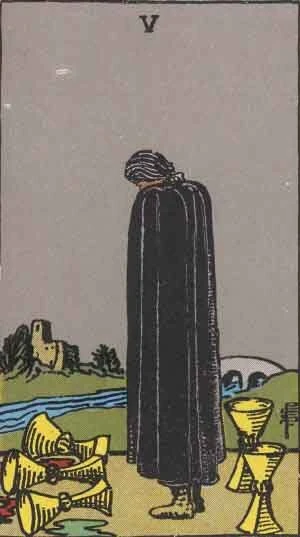
The Mourning Figure
🖤 The Spilled Cups
In the Rider-Waite illustration, a cloaked figure stands with head bowed, consumed by grief. Before them lie three cups, overturned, their contents spilled upon the ground—representing what has been lost, the dreams that didn't materialize, the relationships that ended, the hopes that were dashed. The figure's black cloak speaks of mourning, of being wrapped in sorrow so completely that it becomes one's entire world.
But look behind the figure: two cups remain standing, unnoticed. And beyond them, a bridge leads to a house on the other side of a river. The Five of Cups is not ultimately a card of despair—it's a card about where we place our attention in times of loss. The grief is real. The spilled cups cannot be undone. But obsessing over what's lost blinds us to what remains and what still lies ahead.
💖 Love and Relationships
When the Five of Cups appears in a love reading, it often signals heartbreak or the painful ending of a relationship. This card validates the depth of your grief—whatever you've lost mattered deeply, and it's right to mourn it. Don't let anyone tell you to "just get over it" before you're ready. The heart has its own timeline for healing.
However, the card also gently asks whether you're so focused on what's been lost that you're missing what remains. Are there people in your life who love you, standing unnoticed behind you while you stare at spilled cups? Is there a bridge to the future that you're refusing to see? The Five of Cups honors grief while whispering that grief is not the end of the story.
Questions to reflect on: Am I allowing myself to fully feel this loss? At the same time, am I so consumed by what I've lost that I'm blind to what I still have? What would it mean to turn around?
💼 Career and Finances
In career readings, the Five of Cups often appears after a professional disappointment—a lost job, a failed project, a promotion that went to someone else, a business that didn't succeed. The card acknowledges that these losses are real and painful. Professional setbacks can feel like personal failures, especially in a culture that ties identity to achievement.
Yet the card's message remains: what cups still stand? What skills, relationships, and opportunities survived this setback? The bridge in the background suggests that the path forward exists, even if you can't see it yet through your disappointment. Sometimes our greatest professional growth comes from learning to recover from failure with grace.
Career guidance: Allow yourself to grieve the professional loss without rushing to "be positive." But also gently begin to inventory what remains. What did you learn? What relationships are still intact? What doors might this closing actually open? The five of cups doesn't demand you see the silver lining immediately—it just asks you to eventually turn around.
🌌 Spiritual Significance
The Five of Cups represents the spiritual experience known as the "dark night of the soul"—those periods when everything we believed in seems to crumble, when God or Spirit feels absent, when our old sources of meaning dry up. These are initiatory experiences, painful but transformative. The cups that spill often contain illusions that needed to be released.
In many spiritual traditions, grief is recognized as a path to wisdom. We cannot grow if we never lose anything. The things we cling to—relationships, identities, beliefs—sometimes must be released so that something new can emerge. The mourning figure in their black cloak is undergoing a kind of death, but death in the spiritual sense always precedes rebirth.
The two standing cups behind the figure represent what cannot be lost—the eternal essence that survives all worldly losses. The bridge suggests that passage is possible from this shore of grief to another shore of renewed meaning. But the crossing cannot be rushed. Honor the dark night while trusting that dawn will come.
⚡ The Shadow Side
The shadow of the Five of Cups is getting stuck in grief—making loss your permanent identity, refusing ever to turn around, becoming addicted to suffering. Some people find a strange comfort in misery; it becomes familiar, even safe. The grief that initially deserved full expression can become a prison if we never move through it.
Another shadow expression is premature bypassing—trying to skip over grief to get to the "lesson" or "silver lining." This is its own kind of avoidance. The figure in the Five of Cups needs to stand there for a while. The cups need to be mourned. Spiritual growth doesn't mean not feeling pain; it means feeling it fully and still eventually choosing to live.
Ask yourself honestly: Am I genuinely processing this grief, or have I made it my home? Alternatively, am I rushing through it because I'm afraid of the depth of my own pain? The healthy path lies between these extremes—feeling fully, but not forever.