The Dark Night of the Soul
⚔️ The Sleepless Hours
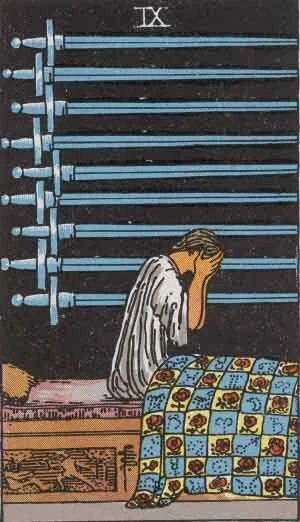
The Nine of Swords presents one of tarot's most viscerally relatable images: a figure sits upright in bed, head buried in hands, clearly in the grip of anguish. Nine swords hang horizontally on the wall behind them—the thoughts that pierce us in the night, the worries that won't let us sleep. The scene is dark; this is 3 AM, the hour when our fears feel most real and our resources feel most depleted. Everyone who has ever lain awake dreading tomorrow knows this card intimately.
This is the card of anxiety, of the mind turning against itself. Unlike the external conflicts of earlier Swords cards, the Nine represents suffering that is largely internal—the thoughts that torture us, the fears we magnify in darkness, the guilt and regret that replay on endless loops. The swords don't touch the figure; they don't need to. Our own minds are capable of inflicting wounds no external enemy could match.
💖 Love and Relationships
In love readings, the Nine of Swords often indicates relationship anxiety that has reached a critical point. This might be fear of abandonment, obsessive worry about a partner's fidelity, or the replaying of old relationship traumas that poison current connections. The card can appear when we're catastrophizing—imagining the worst possible outcomes and living as if they've already occurred.
Sometimes this card indicates grief over a relationship that has ended or one that never was. The nighttime setting suggests the private nature of this suffering—the pain we hide during the day but that overwhelms us when we're alone. The Nine of Swords honors the reality of this anguish while also suggesting that our fears may be larger than the actual situation warrants.
Reflection questions: Are my fears about this relationship based in reality or in past wounds? Am I catastrophizing? What would it feel like to share these nighttime fears with someone I trust? Is my anxiety trying to protect me from something real, or has it become the problem itself?
💼 Career and Finances
In career contexts, the Nine of Swords typically indicates work-related stress that has become overwhelming. This might be burnout, anxiety about performance, fear of job loss, or the weight of responsibilities that feel impossible to bear. The card often appears for those who lie awake running through tomorrow's meetings, replaying today's mistakes, or calculating finances that never seem to add up.
Financially, this card can indicate the particular anguish of money worries—debt that haunts us, bills that accumulate, the fear of not being able to provide. These concerns are often legitimate, but the Nine of Swords reminds us that worry itself doesn't solve problems. The midnight hours spent in anxiety could be better used for rest that enables clearer thinking in the morning.
Career guidance: The Nine of Swords asks whether your work situation has become unsustainable for your mental health. Stress is normal; sleepless nights consumed by dread are a signal that something needs to change. This might mean setting boundaries, seeking help, changing roles, or simply acknowledging that you need support. The card doesn't judge the anxiety—it simply makes visible what you already know.
🌌 Spiritual Significance
Spiritually, the Nine of Swords represents the "dark night of the soul"—a concept from mystical traditions describing a period of profound spiritual crisis that often precedes breakthrough. The darkness is real, the suffering is real, but so is the dawn that follows. Many of our deepest transformations begin in these midnight hours, when we're stripped of distraction and forced to face what we've been avoiding.
The card also speaks to the nature of mental suffering. Buddhism teaches that much of our pain comes not from circumstances themselves but from our mental elaboration on them—the stories we tell, the futures we imagine, the pasts we can't release. The Nine of Swords depicts a mind caught in these spirals, generating suffering that exists nowhere except in thought. This isn't to minimize the pain—mental anguish is as real as physical pain—but to suggest that the mind that creates suffering can also find its way to peace.
This card often appears as an invitation to seek help. The figure suffers alone, but they don't have to. Therapy, spiritual direction, trusted friends, crisis lines—the Nine of Swords reminds us that isolation amplifies anguish. Sharing our darkness doesn't make it disappear, but it does make it bearable.
⚡ The Shadow Side
The shadow of the Nine of Swords is becoming identified with suffering—believing that anxiety is simply who we are rather than something we're experiencing. Some people become so accustomed to midnight dread that they don't know who they would be without it. The worry becomes a strange companion, familiar if not comfortable, and the prospect of peace feels almost threatening.
Another shadow expression is using anxiety to avoid action. If we're consumed with worry, we don't have to make decisions. If we're paralyzed by fear, we don't have to take risks. Sometimes chronic anxiety serves as a shield against the even more frightening prospect of stepping into the unknown. The Nine of Swords asks whether our suffering has become a hiding place.
The deepest shadow is the isolation that shame creates. We often hide our mental anguish, believing we should be stronger, believing others would judge us, believing our fears are somehow shameful. This silence amplifies suffering and prevents the connection that could begin healing. The invitation of this card is to let someone see us in our vulnerability—to admit that we're not okay.